
Westchester traffic ticket lawyer.
Speeding, phone, red light, or anything else on the face of it: text a photograph of your ticket. A licensed attorney reads it with you, tells you what it actually alleges, and in most cases handles the court date without you there.
A photograph is faster than reading it out, because the court, the charge, and the deadline are all printed on the face of it. The first call is free.
This page is general information for drivers who received a ticket in Westchester County. It is not legal advice for a specific ticket and does not create an attorney-client relationship. What a particular court does with a particular charge depends on the facts, the driving record, and that court's own practice.
Westchester has no Traffic Violations Bureau, and that changes everything
If your only experience with a ticket is New York City, you probably believe that fighting one is pointless. In the five boroughs you are right to be skeptical: those tickets go to the Department of Motor Vehicles Traffic Violations Bureau, where plea bargaining is not permitted and the choice is to plead guilty or take a hearing.
Westchester works the other way. There is no Traffic Violations Bureau here. Every ticket is answerable in a local city, town, or village justice court, and in those courts a charge can be taken up with the prosecutor. That is the single most important thing for a commuter to understand about a Westchester ticket, and it is why paying it by mail is a decision worth pausing on.
Paying the ticket is a guilty plea. It closes the case, puts the conviction on the driving record, and ends any chance to discuss the charge. Pleading not guilty preserves the options and puts the ticket on a conference calendar, which is where a licensed attorney can raise the record, the circumstances of the stop, and the proof behind the charge. What comes of that conversation varies by court and by case, and no attorney can promise a result. The general procedure is described on the national traffic violations overview.
How it works
Send a photograph of the ticket
Text it to (914) 481-3764. A photograph is faster and more accurate than reading it aloud, because the court, the charge, the section number, and the deadline are all printed on the face of it. Send only the ticket. Do not send an account of what happened at the stop before there is an engagement in place.
An attorney reads it with you
Not a call center and not an intake screener reading from a script. The first call is free, and it covers what the charge alleges, what the deadline is, what this particular court tends to do with this kind of ticket, and whether your record changes the picture. If the firm is engaged, any fee arrangement is put in writing first.
The court date is handled
For most traffic infractions the attorney files the appearance and covers the conference date, and the driver never has to travel to the courthouse or take a day off. Some charges and some courts require you to be there in person. You are told which one applies to your ticket before anything is filed, not after.
Where your ticket is answerable
Westchester has more than forty separate courts, and your ticket belongs to the one covering the place where the stop happened, not the place you live and not the place you were driving to. The court name is printed on the ticket. Several of them sit in a hamlet or village that does not match the name, which is a common source of missed deadlines.
City courts
- Mount Vernon
- New Rochelle
- Peekskill
- Rye
- White Plains
- Yonkers
Town courts
- Bedford (Bedford Hills)
- Cortlandt (Cortlandt Manor)
- Eastchester
- Greenburgh (Tarrytown Road)
- Harrison
- Lewisboro (Cross River)
- Mamaroneck
- Mount Kisco
- Mount Pleasant (Valhalla)
- New Castle (Chappaqua)
- North Castle (Armonk)
- North Salem
- Ossining
- Pelham
- Pound Ridge
- Rye (sits in Port Chester)
- Scarsdale
- Somers
- Yorktown (Yorktown Heights)
Harrison, Mount Kisco, and Scarsdale are coterminous town and village governments, so each has a single court. Pelham Town Court also covers the Villages of Pelham and Pelham Manor. Rye Town Court sits inside the Village of Port Chester and covers Port Chester, Rye Brook, the Rye Neck section of Mamaroneck, and Westchester County Airport. It is not Rye City Court, which is a different court in the City of Rye. Port Chester also keeps its own village court in the same building on North Main Street, so a Port Chester address on a ticket can belong to either one. The court named on the ticket is the one that matters. Greenburgh Town Court carries a White Plains mailing address on Tarrytown Road and is not White Plains City Court.
Village courts
- Ardsley
- Briarcliff Manor
- Bronxville
- Buchanan
- Croton-on-Hudson
- Dobbs Ferry
- Elmsford
- Hastings-on-Hudson
- Irvington
- Larchmont
- Mamaroneck Village
- Pleasantville
- Port Chester
- Sleepy Hollow
- Tarrytown
- Tuckahoe
Court locations, calendars, and clerk hours change. The court printed on your ticket controls, and it is worth confirming the current address and session schedule with that court or with counsel before travelling anywhere.
If your ticket names a place that is not on those lists
Some Westchester villages and hamlets do not hold a court of their own, and some courts sit in a village whose name is not the court's name. These are the ones that catch people out.
- Pelham Manor and the Village of Pelham do not have separate courts. Both are heard in Pelham Town Court, which sits at 20 Fifth Avenue in Pelham.
- Rye Brook, the Rye Neck section of Mamaroneck, and Westchester County Airport are heard in Rye Town Court, in Port Chester.
- The Village of Ossining does not have a separate court. Village matters are heard in Ossining Town Court on Spring Street. Briarcliff Manor is the exception in that town and keeps its own village court.
- Cross River and South Salem are Lewisboro, whose court sits in Cross River rather than at the town offices in South Salem.
- Valhalla is Mount Pleasant. Chappaqua is New Castle. Armonk is North Castle.
- Bedford Hills and Katonah are Bedford, whose court sits in Bedford Hills. Cortlandt Manor is Cortlandt. Yorktown Heights is Yorktown.
Parkway and highway stops
There is no separate highway court in New York. A ticket written on a parkway or interstate is returned to the city, town, or village whose boundaries include that stretch of road, which is why two stops a few miles apart on the same parkway can land in different courts with different practices.
The roads that generate most of the county's tickets are the Hutchinson River Parkway, the Saw Mill River Parkway, the Bronx River Parkway, the Cross County Parkway, the Sprain Brook Parkway, the Taconic State Parkway, I-287, I-684, and I-95. Stops on the interstates are typically made by the State Police, and stops on the county parkways by county or local police, but the ticket still goes to the local court either way.
Speeding tickets, and the other charges written here most
Most Westchester tickets are speeding tickets, and most of those are written under VTL 1180. The section number printed on the face of your ticket is the charge, and it drives nearly everything that follows: whether points attach and how many, whether the court will take the charge up at all, and whether anything about your license is exposed. If you can read the number, you can find your ticket here.
- Speeding, VTL 1180. The everyday charges are 1180(b) and 1180(d), speed above a statutory or posted limit. The point value scales with how far over the ticket alleges you were, so the speed written in the officer's box matters as much as the section number does.
- Speeding in a construction zone, VTL 1180(f). For violations on or after February 16, 2026 this carries a flat eight points whatever the speed, where it previously followed the ordinary speed scale.
- Mobile telephone use, VTL 1225-c, and portable electronic device use, VTL 1225-d. The phone charge and the texting charge. Both are five-point violations, and both turn up constantly on the parkways.
- Traffic control device, VTL 1110(a), red light, VTL 1111(d), and stop sign, VTL 1172(a). Three separate charges that people describe to an attorney in the same words. Which one is written changes what there is to argue about.
- Unsafe lane change, VTL 1128, and following too closely, VTL 1129(a). Frequently written after a collision, and frequently paired with an accident report that becomes the evidence.
- Uninspected vehicle, VTL 306(b), and unregistered vehicle, VTL 401. Equipment and paperwork charges. They are not moving violations, but they still summon you to a court date and they still go on a record.
- Unlicensed operation, VTL 509, and aggravated unlicensed operation, VTL 511. These are not the same charge. Section 509 continues to carry no points. Section 511 is misdemeanor-grade, it went from zero points to eleven for violations on or after February 16, 2026, and it is the one on this list that belongs in a conversation with an attorney rather than a payment envelope.
A section number on this page is a description, not advice about your ticket. What a particular court will do with a particular section depends on the facts, the driving record, and that court's own practice.
What is actually at stake
A traffic conviction is not only the fine printed on the ticket. The Department of Motor Vehicles assigns points to most moving violations and assesses them as of the date of the violation rather than the date of the conviction, so the rules in force on the day you were stopped are the rules that apply to your ticket. That detail matters more than usual at the moment. The Commissioner of Motor Vehicles amended the point regulations with effect from February 16, 2026: violations committed on or after that date carry the new point values, violations committed on or before February 15, 2026 carry the former ones, and the look-back window the department uses when it weighs administrative action against a persistent violator moved from eighteen months to twenty-four. Several offenses that previously carried no points now carry a great many, including aggravated unlicensed operation and alcohol or drug related convictions.
The conviction itself stays visible on the driving abstract longer than the points remain chargeable. Insurers do their own underwriting from that record at renewal, on their own schedule. For a driver who is already carrying points, or who drives for a living, the difference between one disposition and another is the entire question, and it is worth a phone call before the deadline on the ticket passes.
Commercial and out-of-state licenses
Commercial license holders are treated differently by federal rule. States are barred from masking a commercial driver's convictions, which means some dispositions available to other drivers are not available here, serious violations carry disqualification exposure, and a ticket written while driving a personal car can still reach a commercial privilege. Employer notification duties can also be triggered quickly.
If your license was issued by another state, a New York conviction is generally reported home, and your own state then applies its own point and suspension rules to it. Connecticut and New Jersey commuters ticketed on the Hutchinson or I-95 run into this constantly. Either situation is worth raising in the first sentence of the first call, because it changes what a sensible outcome looks like.
Who you would be talking to
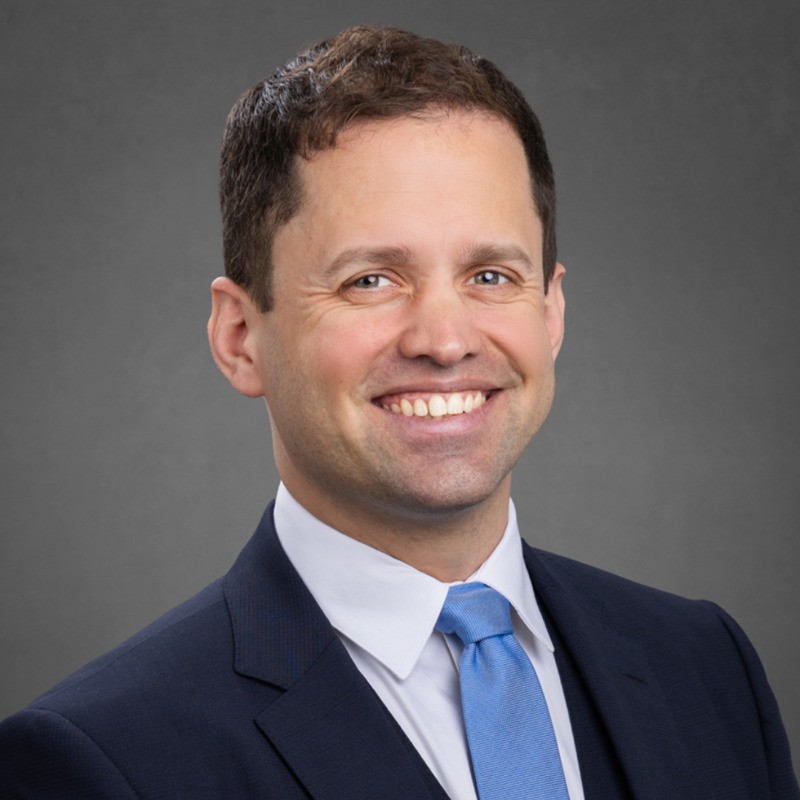
Kevin Finkelstein is the principal attorney of Finkelstein Criminal Defense PLLC, admitted in New York, with a law office on South Broadway in White Plains. The number on this page reaches a licensed attorney directly rather than a call center or a switchboard. A fuller background is on the about page.
Westchester traffic matters are handled alongside the firm's criminal defense practice. Matters outside the firm's areas of practice, or arising where its attorney is not admitted, may be referred to independent counsel in conformity with the New York Rules of Professional Conduct.
Common questions
Not in most traffic infraction cases. A licensed attorney can file the appearance, enter the plea, and handle the conference date on your behalf, which is why many drivers never see the inside of the courthouse. Some charges and some courts do require the driver to be present, and a criminal-grade charge such as an alleged misdemeanor is treated differently from a standard ticket. The attorney reviews your specific ticket and the practice of the specific court, then tells you which category you are in before anything is filed.
The court is printed on the ticket itself, and it is the court for the place where the stop happened rather than the place where you live or where you were driving to. Westchester has more than forty separate city, town, and village courts, and several of them sit in a different hamlet than their name suggests. Sending a photograph of the ticket is the fastest way to confirm the court, the deadline printed on it, and what the charge actually alleges.
Parkway and highway tickets are answerable in the city, town, or village where the stop occurred, not in a separate highway court. A stop on the Hutchinson River Parkway, the Saw Mill River Parkway, the Bronx River Parkway, the Cross County Parkway, the Sprain Brook Parkway, the Taconic State Parkway, I-287, I-684, or I-95 is returned to whichever local court covers that stretch of road. The ticket names that court.
It is procedurally different. Non-criminal moving violations issued in the five boroughs are handled by the Department of Motor Vehicles Traffic Violations Bureau, where plea bargaining is not permitted and the options are to plead guilty or go to a hearing. Westchester has no Traffic Violations Bureau. Tickets here are answerable in local justice courts, where a charge can be discussed with the prosecutor and where the outcome depends on the facts, the driving record, and the practice of that particular court.
The first call is free. The attorney reads the ticket with you, explains what the charge alleges and what the deadline is, and tells you what the realistic options are for that court. If the firm is engaged after that conversation, any fee arrangement is put in writing before the representation begins. Nothing is charged for the initial call itself.
It usually changes the analysis. Federal rules bar states from masking convictions for commercial license holders, so dispositions that are available to other drivers may not be available to you, and a violation in your personal vehicle can still reach your commercial privileges. If your license was issued by another state, New York generally reports the conviction to that state, and your home state then applies its own rules to it. Both situations are worth raising on the first call so the strategy accounts for them.
The fastest way to get an answer
Text a photograph of the ticket to (914) 481-3764. One picture carries the court, the charge, the section number, and the deadline, which is everything needed to tell you where you stand. If you would rather speak to someone, the same number takes a call.
Sending this does not create an attorney-client relationship, and it is not a substitute for meeting the deadline printed on your ticket. Please do not include confidential details about the stop. Information sent before an engagement is in place may not be protected by the attorney-client privilege.